Kill The Shadow Multiple Endings
How attributes, corkboard theories, and Theo-era choices branch outcomes across Dark Tide City.
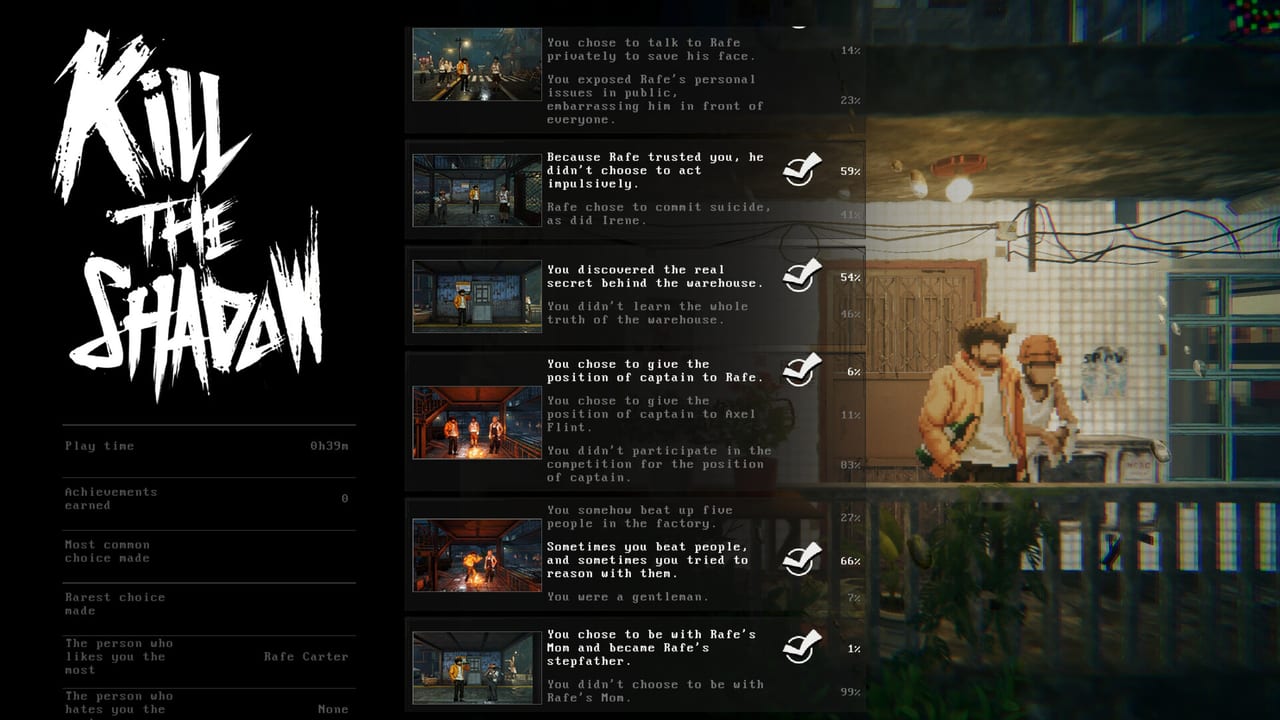
Kill The Shadow advertises multiple endings driven by investigation choices and how Lucas applies Strength, Spirit, and Charm after the corkboard validates a theory. Shadowlight and Phoenix Game frame the campaign as a decade-long memory conspiracy across Dark Tide City — factory rust, Shipwreck Wharf grudges, Pig Cage Walled City informants, and Old Town temple politics. Endings are not a single final menu pick; they emerge from accusation targets, public-versus-private truth, ally treatment, and build gates accumulated district by district.
The free Steam demo (app 2947640) previews this philosophy through Captain Theo, Lux, Lucky, Rafe Fang, and Dr. Cyrus branches — achievements like Elementary my dear Watson, Slick Move, Master Negotiator, and I See What You Did There are ending-adjacent flags. Full release on app 2660230 (~August 4–5, 2026) expands case count. This page stays spoiler-light: it explains systems, not every retail epilogue line.
The three pillars of ending variance
1. Attribute builds (Strength / Spirit / Charm)
Lucas’s stats gate how he executes a correct theory:
- Strength — force, intimidation, violent resolutions; demo extreme paths include Cyrus beats and guard blame shifts
- Spirit — psychological leverage, guilt, fear; extracts confessions others miss after Rewind
- Charm — persuasion, bribery, apology; preserves alliances when truth hurts
Two players with identical corkboards can diverge if one lacks Charm to apologize after a public Theo revelation. Read attribute overview and plan hybrids with the build planner.
2. Corkboard accusations
The corkboard decides who Lucas can credibly accuse. Endings track:
- Whether your linked cards survive validation
- If you accuse the true actor versus a convenient scapegoat
- Timing — confronting before Rewind confirmation closes softer branches
Mislinked boards do not always hard-lock the game, but they prune ending tiers tied to justice versus expediency. Deduction corkboard guide covers linking discipline.
3. Public truth versus private deals
Social endings hinge on who hears the verdict:
- Public revelations — press, crowds, Theo humiliation; demo achievement language for revealing Theo’s secret publicly
- Private briefings — alliance preservation at the cost of city-wide transparency
- Apologies and follow-ups — demo Slick Move shows endings are processes, not single clicks
The Teddy case is the wiki’s deepest Theo moral lab — loyalty, animal harm, and whether Lucas serves justice or comfort.
How demo choices foreshadow retail endings
Demo branches already teach ending grammar without spoiling full campaign epilogues:
| Demo tension | Ending lesson |
|---|---|
| Persuade Rafe Fang vs violent Cyrus paths | Charm versus Strength morality |
| Reveal Theo secret vs apologize after | Public truth versus relationship repair |
| Petty cash from a corpse | Economic cynicism flags |
| Lux and Lucky affection | Ally endings reward consistent tone |
Track trophies on achievements guide to see which flags Steam surfaces — a proxy for ending-relevant decisions.
District-level ending pressure
Each Dark Tide City zone biases different ending tones:
Factory — class conflict and cover-ups; Strength shortcuts can factory-lock informants against you in later districts.
Shipwreck Wharf — grudge memory; Spirit exposes old debts, Charm buys truce, Strength escalates feuds into bloodier epilogues.
Pig Cage Walled City — survival ethics; Charm and Spirit sustain informants like Kiki; Strength may win cases while losing the city.
Old Town — institutional performance; public accusations here swing political endings hardest — relevant to Theo and temple-fair arcs in cases overview.
Rewind and The Shadow — ending inputs
The Shadow’s Rewind does not choose endings directly, but missing Rewind details causes wrong corkboard targets — indirect ending locks. Treat Rewind as mandatory before any accusation you intend to carry to finale weight. Rewind guide explains scene reading habits.
Planning multiple playthroughs
Retail endings reward intentional reruns:
- First run — balanced or Charm-primary; learn systems via demo getting started patterns
- Second run — Spirit-primary for confession-heavy cases
- Third run — Strength-primary for violent demo-parity paths and alternate justice outcomes
Document accusation targets and public-versus-private picks per case — endings stack flags across Teddy, Master Reed fair threads, and Wharf grudges.
What this guide deliberately avoids
Full-release epilogue text, secret ending names, and post-credit scenes are omitted here to limit spoilers. After launch, the walkthrough hub will add case-specific ending appendices without duplicating this systems page.
Related pages
- Builds hub — Attribute routes that gate ending branches
- Achievements — Demo flags that mirror ending philosophy
- Teddy case walkthrough — Theo public versus private outcomes
- Cases overview — When district arcs intersect finale pressure
- Demo walkthrough — First-run choice map
Multiple endings in Kill The Shadow reward detectives who treat dialogue, stats, and corkboard ethics as one system — not a checklist clicked after the last boss.
Frequently Asked Questions
Quick answers to the most common Kill The Shadow questions.
Are Kill The Shadow endings chosen only at the finale?
No. Demo and official materials imply cumulative flags — accusation targets, public versus private truth, ally treatment, and attribute-gated choices across districts shape outcomes.
Do I need three full playthroughs for all endings?
Likely yes for extremes — Strength violence paths and Charm persuasion paths conflict in demo achievements, suggesting retail endings need build-specific runs.
How does the Teddy case relate to endings?
Theo and Teddy test public revelation versus private loyalty — demo achievements Elementary my dear Watson and Slick Move mirror that tension expanded in the Teddy walkthrough.
Can a wrong corkboard still finish the game?
Probably, but accusing scapegoats or incomplete theories should prune higher-tier endings tied to justice and city trust — exact tiers expand at full release.
Which guide covers demo ending flags specifically?
The achievements guide maps demo trophy names to choices; this page explains the underlying Strength, Spirit, Charm, and publicity systems.
Does Spirit build get unique endings?
Spirit unlocks confession routes and psychological resolutions that Strength cannot reach — often middle paths between violent and purely social endings.