Kill The Shadow Spirit Build Guide
Win confessions by breaking the story people tell themselves.
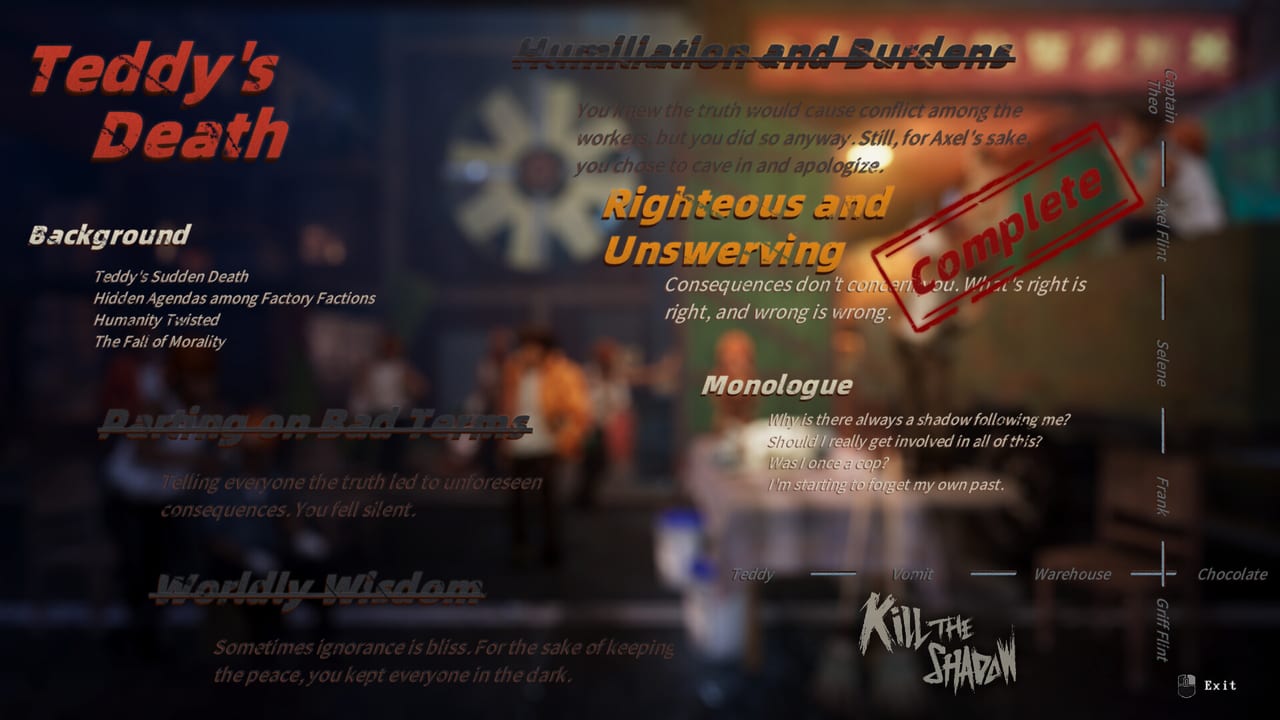
Spirit is Lucas’s aptitude for psychological leverage — fear, guilt, shame, and manipulation applied with surgical language rather than fists. Where Strength breaks doors, Spirit breaks narratives. In Kill The Shadow, that distinction matters because the corkboard already tells you what happened; Spirit helps you learn why someone wanted it hidden, and how to make them admit both aloud.
Spirit builds reward patient detectives who linger on Rewind reconstructions, note contradictions, and return to interrogations with phrases that land like hooks. The Shadow’s gremlin energy complements this playstyle — watching death replays, then whispering the exact detail a liar hoped nobody noticed.
What Spirit does in practice
Spirit options appear as mind games: implying you know more than you do, exposing secret relationships, triggering panic about accomplices, or offering cruel mercy if the suspect cooperates. These are not random intimidation checks — they reference evidence already pinned on the corkboard or revealed during Rewind.
Failed Spirit rolls sometimes worsen situations differently than failed Strength. A botched intimidation might invite violence; a botched manipulation can tip the suspect that you are bluffing, locking higher-tier Spirit lines until you find more evidence.
Rewind as a Spirit playground
Rewind reconstructs final moments of the dead through the Shadow. Spirit builds benefit most when reviewing these scenes:
- Spotting micro-timing gaps between testimony and replay
- Noticing who watches the victim die without intervening
- Identifying objects moved after death that implicate a cover-up
After Rewind, Spirit-heavy Lucas often receives additional interpretive prompts — internal monologue beats that suggest which emotional button to press back in the living world. Skipping Rewind review weakens Spirit more than any other stat because you lose the ammunition for your best lines.
Pair Rewind notes directly with corkboard links. Spirit players should maintain a “motive column” on the board: means, opportunity, and pressure point for each suspect.
District-by-district leverage
Shipwreck Wharf grudges are Spirit territory. Decades-old insults, stolen catches, and betrayed crews surface as psychological fault lines. Strength gets you onto the pier; Spirit learns which name makes a hardened dockworker flinch.
Factory exploitation stories also respond to Spirit — workers fear reprisals more than they fear Lucas. Frame questions around managers listening, or imply union allies already talked. Pure force can unify workers against you.
Pig Cage Walled City residents carry trauma from both criminals and police. Spirit works when you demonstrate you punish the powerful, not the desperate. Cross the line into cruelty and Charm routes with community leaders vanish.
Old Town elites expect courtesy. Spirit here resembles high-stakes negotiation — veiled threats about scandal, not shouting. Combine with light Charm if you need an invitation before the mind games start.
Spirit versus Charm: overlap and boundaries
Both stats talk; the difference is intent. Charm buys cooperation with likability, gifts, and social grace. Spirit extracts cooperation by exposing what the target stands to lose internally — reputation, marriage, faith, or rank.
If a scene offers bribery and a guilt trip, bribery is Charm, guilt is Spirit. Hybrid builds with both stats see the full menu; specialists must commit to one tone per conversation or risk inconsistent Lucas characterization, which some scenes penalize subtly.
Read the attribute overview for the full comparison table.
Case strategies
Teddy (Captain Theo’s dog) — Spirit shines when witnesses lie to protect authority figures. Press on duty schedules and who feared Theo’s reaction more than the truth about Lux or kennel access. Avoid Spirit lines that humiliate Theo publicly if you want reconciliation achievements.
Master Reed temple fair — crowded, performative setting. Spirit works in back rooms where vendors confess to shortcuts and superstitions they would never admit on stage. Public Spirit accusations can incite riots — bad for truth and for Lucas’s health.
Shipwreck Wharf grudge cases — chain Spirit revelations across interviews so each confession implicates the next name on your corkboard. This is the stat’s showcase arc in many player-written demo summaries.
Follow scene order in cases overview and demo walkthrough.
Build paths and point allocation
Analyst (specialist) — max Spirit, minimal Strength. Deepest Rewind reads; vulnerable to physical blockers. Bring consumables or pre-unlock side routes if the full game supports them.
Confessor (hybrid) — Spirit primary, Strength secondary for wharf gatekeeping. Balanced for Shipwreck and factory B-plots.
Silver tongue of guilt (hybrid) — Spirit plus Charm for Old Town salons. Expensive point spread; strongest role-play versatility, weakest peak options.
Use the build planner to verify thresholds before launch day in August 2026.
Risks, ethics, and endings
Spirit endings skew morally gray. You may expose truth while destroying families, or extract confessions that legally fail without corroborating evidence. Multiple endings referenced by developers include Spirit-heavy paths where Lucas becomes the city’s most feared interrogator — not its hero.
Track which manipulations you used; second playthroughs with Charm may repair relationships Spirit burned. Return to the builds hub to compare full routes.
Frequently Asked Questions
Quick answers to the most common Kill The Shadow questions.
Does Spirit replace corkboard deduction?
No. Spirit consumes deduction output — it does not generate it. You still link clues; Spirit decides how you weaponize the result in dialogue.
Is Spirit the best stat for Shipwreck Wharf?
For motive depth, yes. You may still need Strength or Charm to reach key witnesses. Spirit is strongest once interviews begin, not before.
Can Spirit options fail permanently?
Some lines close if you bluff without evidence or push trauma too early. Gather corkboard support and Rewind details before high-tier Spirit checks.
How does Spirit interact with the Shadow personality?
The Shadow enables Rewind; Lucas applies Spirit in conversation. Their banter sometimes hints at which emotional lever to pull next.
Should my first playthrough be Spirit?
Spirit rewards players who read carefully and tolerate moral ambiguity. First-timers seeking broader social safety may prefer Charm, then rerun Spirit for wharf grudges.