Kill The Shadow Builds
Plan Lucas around Strength, Spirit, and Charm before you commit to a case.
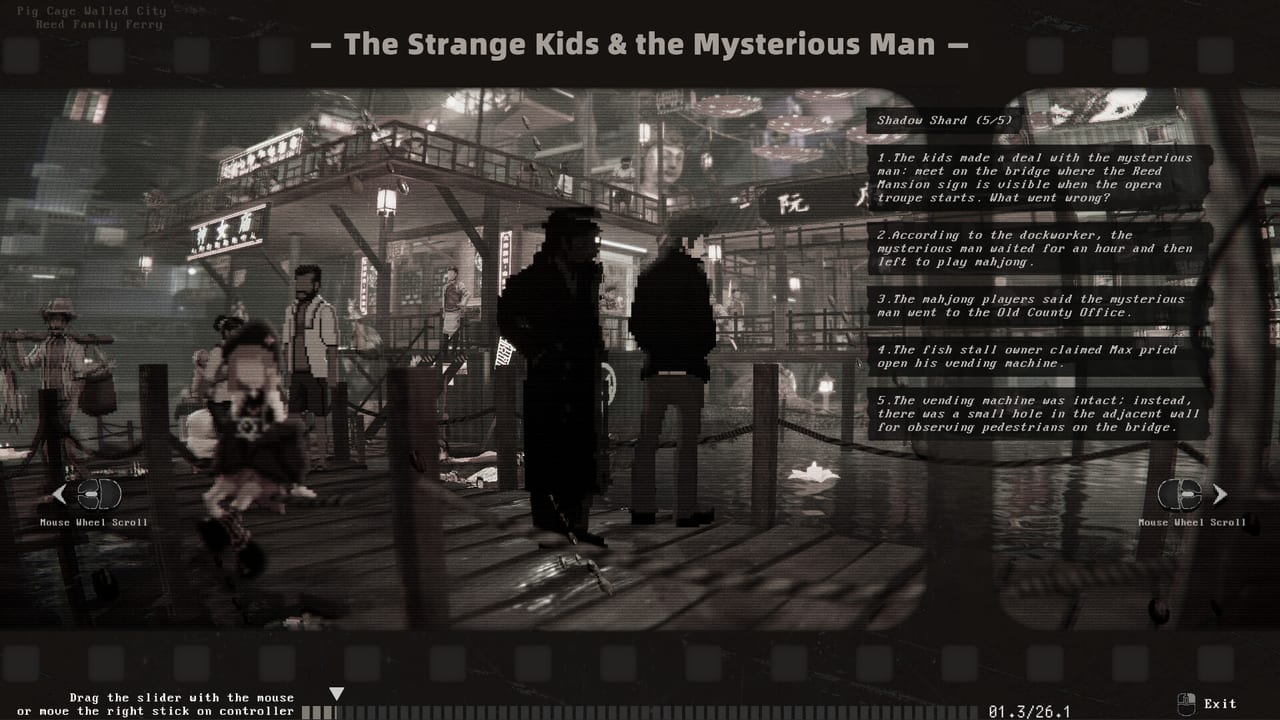
Kill The Shadow is a detective RPG where Lucas solves crimes alongside the Shadow, a supernatural partner that reconstructs the final moments of the dead. Progress is not just about finding clues — it is about how Lucas applies pressure once evidence lands on the corkboard. Three attributes define that approach: Strength for physical force, Spirit for psychological leverage, and Charm for persuasion, talk, and bribery-style solutions.
This builds hub collects every attribute guide on the wiki so you can compare paths before the full Steam release in August 2026. The playable demo already shows how different investments change interrogation menus, Rewind follow-ups, and case resolutions. Two detectives with the same corkboard can walk away with different confessions if their builds diverge.
Why builds matter in a detective RPG
Most adventure games funnel everyone toward one correct dialogue tree. Kill The Shadow gates investigative approaches behind Lucas’s stats. A high-Strength Lucas can intimidate factory foremen and muscle through Shipwreck Wharf grudges. A Spirit-heavy Lucas reads fear, guilt, and leverage — useful when witnesses hide behind trauma rather than locks. A Charm-focused Lucas buys time with bribes, smooth talk, and social grace, which matters in Old Town salons and temple-fair crowds around Master Reed’s case.
Those differences stack across districts. The factory district rewards blunt force when unions and management clash. Shipwreck Wharf simmers with long grudges where Spirit can peel layers of denial. Pig Cage Walled City mixes poverty and pride — Charm often opens doors that Strength would bar forever. Old Town carries institutional weight where all three stats appear, but the “right” one depends on who holds power in that scene.
Start with the attribute overview
If you are new, read the attribute overview first. It explains how Strength, Spirit, and Charm interact with the corkboard deduction system and Rewind reconstructions. You will learn which stat checks appear during evidence linking, which options fade if you spread points too thin, and how multiple endings tie back to build paths plus story choices.
The overview also covers respec expectations for the full game, demo limitations, and when to specialize versus running a hybrid. Hybrid builds can reach more dialogue branches early, but specialists unlock the strongest scene-specific outcomes — including endings the developers have teased for divergent playthroughs.
Deep dives by stat
Each attribute has a dedicated guide with scene-level advice, district notes, and pairing suggestions:
- Strength build guide — physical pressure, intimidation, and force-first resolutions in industrial and waterfront scenes.
- Spirit build guide — psychological leverage, manipulation, and reading hidden motives during Rewind and interrogation.
- Charm build guide — persuasion, talk, bribery, and social routes through Old Town and public-facing cases like the temple fair.
Cross-read all three even if you plan to main one stat. Cases such as Teddy (Captain Theo’s dog) and the Shipwreck Wharf grudge chain often hide optional branches behind a secondary attribute threshold. Knowing the backup path prevents soft-locking yourself into a weaker confession.
Plan before you play
Use the build planner to sketch point allocations against the cases you care about. The tool mirrors demo level caps and highlights which corkboard branches each stat unlocks. Pair it with the guides hub for controls, deduction basics, and first-hour routing through Dark Tide City.
For story order and case-by-case spoilers, see the walkthrough hub. Builds and walkthroughs are two halves of the same plan: walkthroughs tell you where to go; builds tell you what Lucas can do when you arrive.
Demo takeaways for full-release planning
The demo concentrates on factory-adjacent mysteries and Captain Theo’s orbit, including the Teddy case. Players who finished it report widely different achievement lists depending on Strength versus Charm choices — proof that the RPG layer is not cosmetic. Carry that mindset into Master Reed’s temple fair and the fuller Shipwreck Wharf arc at launch.
When August 2026 arrives, revisit this hub after major patches. Attribute tuning, new cases, or balance passes may shift recommended openings. Until then, treat these guides as living references grounded in demo behavior and official Steam materials.
Recommended reading order
- Attribute overview — mechanics and hybrid basics.
- Your primary stat guide — Strength, Spirit, or Charm.
- The other two stat guides — at least skim secondary thresholds.
- Build planner — finalize points before a new run.
- Walkthrough hub — align build with case sequence.
Frequently Asked Questions
Quick answers to the most common Kill The Shadow questions.
Can I respec Lucas's attributes in Kill The Shadow?
The demo uses a fixed progression slice, so treat respec rules as unconfirmed until launch. Plan builds with the attribute overview and build planner, and assume full-release saves may reward committed specialization.
Which attribute is best for a first playthrough?
No single stat dominates every district. Charm offers the broadest social safety net in the demo, while Strength clears factory scenes quickly. Spirit shines in Rewind-heavy moments where psychological pressure breaks guarded witnesses.
Do builds affect the corkboard deduction system?
Yes. Connected evidence opens theory paths, but which interrogation and resolution options appear depends on Strength, Spirit, and Charm thresholds. Under-invested stats can hide entire branches.
How many endings tie to builds?
Developers have stated that choices plus build paths feed multiple endings. Exact counts may grow after launch, but demo outcomes already diverge based on attribute-gated decisions.
Should I use the build planner before the demo or full game?
Use it for both. Mapping points against Teddy, Master Reed, and Shipwreck Wharf cases helps you avoid spreading stats too thin before committing to a playthrough style.